
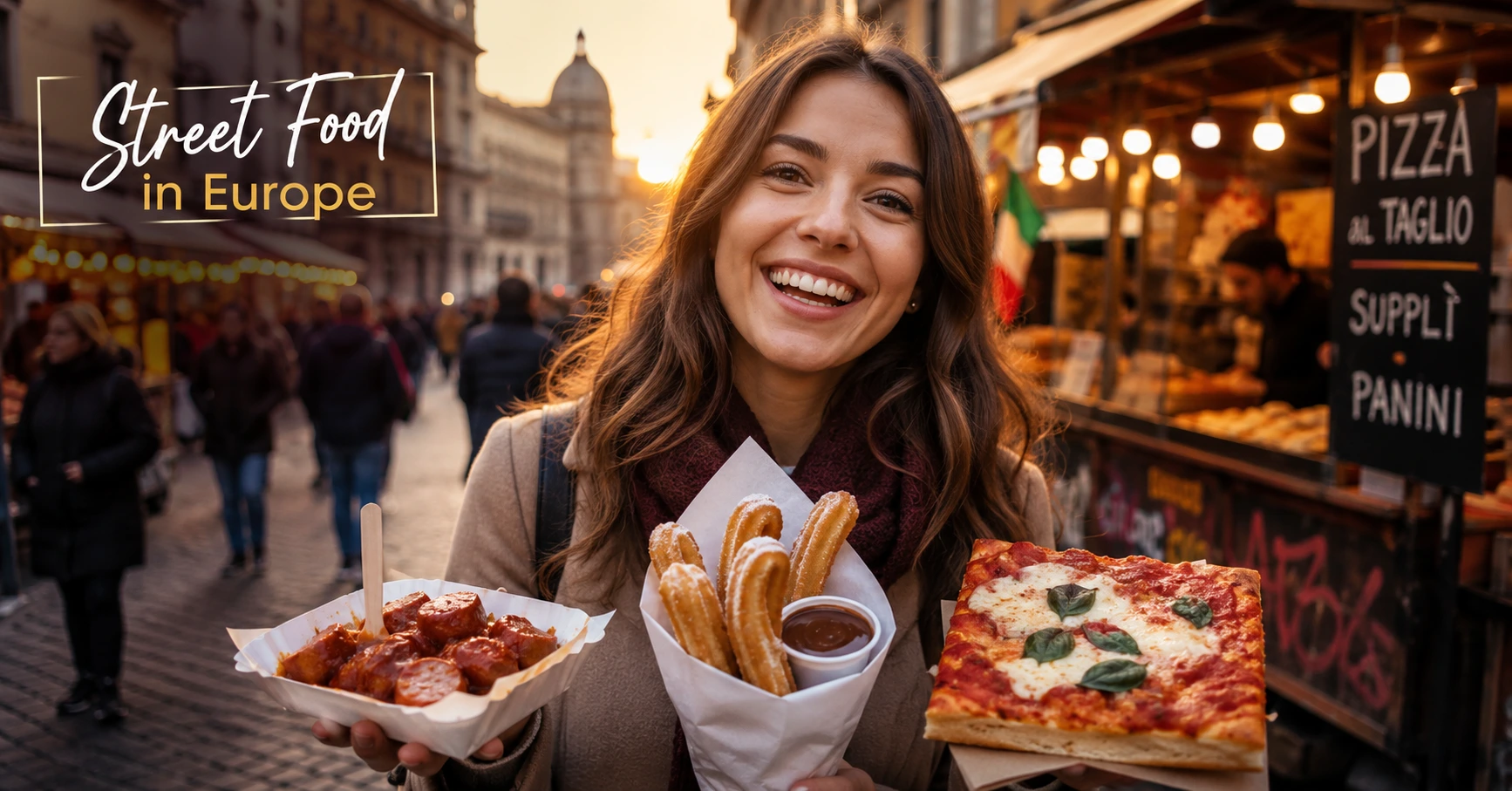
Let me be honest with you. I’ve stood in the middle of a Berlin street, currywurst in one hand, no idea which stall was worth it – and I just picked the one with the longest queue of locals. Best decision I ever made.
And that, to some extent, is precisely the goal of this guide to street food around Europe. Street food around Europe is not the same as seeking the perfect Insta-worthy photo.
For those looking to explore the culinary scene in Europe for their first or their fifth time, here’s what you should know.
How to Tell if Your Street Food Stop Will Be Authentic
Before we delve into the food, there is one aspect that needs to be addressed.
It is effortless to go to any street food stall that caters to tourists and think you’re getting “the real thing.” But here’s a simple trick – look at who’s eating there. Office workers grabbing lunch? Elderly regulars who’ve been coming for decades? That’s your green light.
Also, watch the menu. The best street food vendors do one thing really well. A stall selling fifteen different dishes is usually hedging. The ones with a short, focused menu almost always win.
Top Street Foods in Europe You Absolutely Must Try
1. Parisian Kebab – Yes, This Is Serious Food
Don’t sleep on the kebab in Paris. It’s not fast food here – it’s a proper institution.
There are numerous kebab restaurants in Paris that have been influenced by immigrants from North Africa and Turkey. Every quarter prepares its own version, with its own special type of bread and flavor. All you have to do is ask the salesperson about his preference. That question alone will change your entire experience.
Best eaten: late at night, after dinner, wandering through the city.
2. Berlin Currywurst – The Most Democratic Dish in Germany
Sliced sausage. Curried ketchup. A bread rolls on the side.
Currywurst was created after World War II in 1949 by Herta Heuwer. She combined British ketchup with curry powder for feeding the starving laborers. Currywurst is today a fast food served in street stands to everybody – workers, bankers, tourists, or residents.
Tip: Avoid the stalls around famous sights. Visit an informal stall in a regular residential district for the special sauce.
3. Spanish Churros – Not What You Think
Here’s something that surprises most first-time visitors. Churros are a breakfast food in Spain.
You go to a churrería in your local community and eat some with hot, thick chocolate. You enjoy the experience with whomever you may be with.
Don’t eat them as a dessert – you’ll miss the whole ritual.
4. Swiss Cervelat – The Sausage Switzerland Lives By
Switzerland produces around 160 million cervelats annually – roughly 20 per person per year. That should tell you something about how much the Swiss love this thing.
Split down the middle, grilled over an open fire at summer festivals, served simply – the cervelat has a mild, slightly smoky flavour that’s deeply satisfying. It tastes like outdoor tradition.
5. Neapolitan Pizza al Taglio – Walk-and-Eat Done Right
A slice of wood-fired pizza, charred at the edges, simple toppings, eaten while you walk. That’s it.
Order the margherita. Don’t overthink it. The quality of the ingredients does all the work.
Read more at: MUST-TRY FOODS IN SOUTH AFRICA
Comparing Flavours, Tradition, and Local Food Culture
Here’s where it gets really interesting. These dishes aren’t just different in taste – they carry completely different stories.
Currywurst was born out of post-war necessity. It fed working people who had very little. That history lives in how it’s served – no frills, standing up, paper plate.
Churros come from centuries of community gathering. Sitting down, sharing, talking – the food is almost secondary to the act of being together.
The Parisian kebab is a living piece of migration history. Each neighbourhood shop has adapted the recipe to French tastes, French bread, French hours. The result is something genuinely Parisian – not imported, not a copy.
When you understand why a dish exists, eating it becomes something completely different.
| Street Food | Flavour | Cultural Story | Best Time to Eat |
| Parisian Kebab | Savoury, spiced | Immigration & adaptation | Late evening |
| Berlin Currywurst | Tangy, peppery | Post-war working class | Any time |
| Spanish Churros | Sweet, doughy | Community ritual | Breakfast |
| Swiss Cervelat | Mild, smoky | National identity | Festivals/lunch |
| Pizza al Taglio | Charred, simple | Ancient baking craft | Midday |
A few practical things to keep in mind:
- If you want bold, punchy flavours – go for the kebab or currywurst.
- If you want something lighter and social – churros or cervelat.
- Some of these are stand-and-go (currywurst, kebab). Others invite you to slow down (churros).
- Eating each dish at the locally correct time of day is half the experience.
Planning Your European Street Food Tour
You don’t need an overly complex plan; you simply need the right kind of anchor cities.
First things first – choose your cities and then the food to eat while there. Every city in Europe has its own culinary specialty such as French kebabs and pastries, German currywurst, or the churros of Spain, and this list can go on and on. Experience as many street foods as you possibly can.
Avoid the landmarks. Avoid the landmarks. You might find yourself having some of the best street foods in areas which are quite obscure. Particularly, when you find yourself in a highly populated touristic area, just step out of it. Take help and advice from the locals there to track the best street food.
Choose the right time to enjoy your meal. Getting your churros in the middle of the day isn’t all that bad. Getting them in the morning accompanied by your hot drink and great company is something else. Trust us when we say the difference makes all the difference.
Maintain a food journal, this might sound a little boring but practically is not. Start mentioning everything you ate along the way, including the little surprises or the special moment associated with it. This will make up for amazing experiences to recall later on.
Closing Remarks
Good street food experiences are not meant to be ticked off from a list. Instead, they consist of the story of the man selling his signature sauce for thirty years. The tale of a family that adjusted their old recipe to fit a new place. Or the morning tradition of gathering together to enjoy some hot food.
Memorable food experiences occur only if you stop seeing each dish as an item and start regarding it as an icebreaker.
That is precisely what TravellingAtlas stands for. Not only do you have to get immersed into the landscape of the destination country, but also its culinary delights and traditions too. Your future journey to Europe will gain a completely different meaning if you decide to explore the destination through its street foods.


